
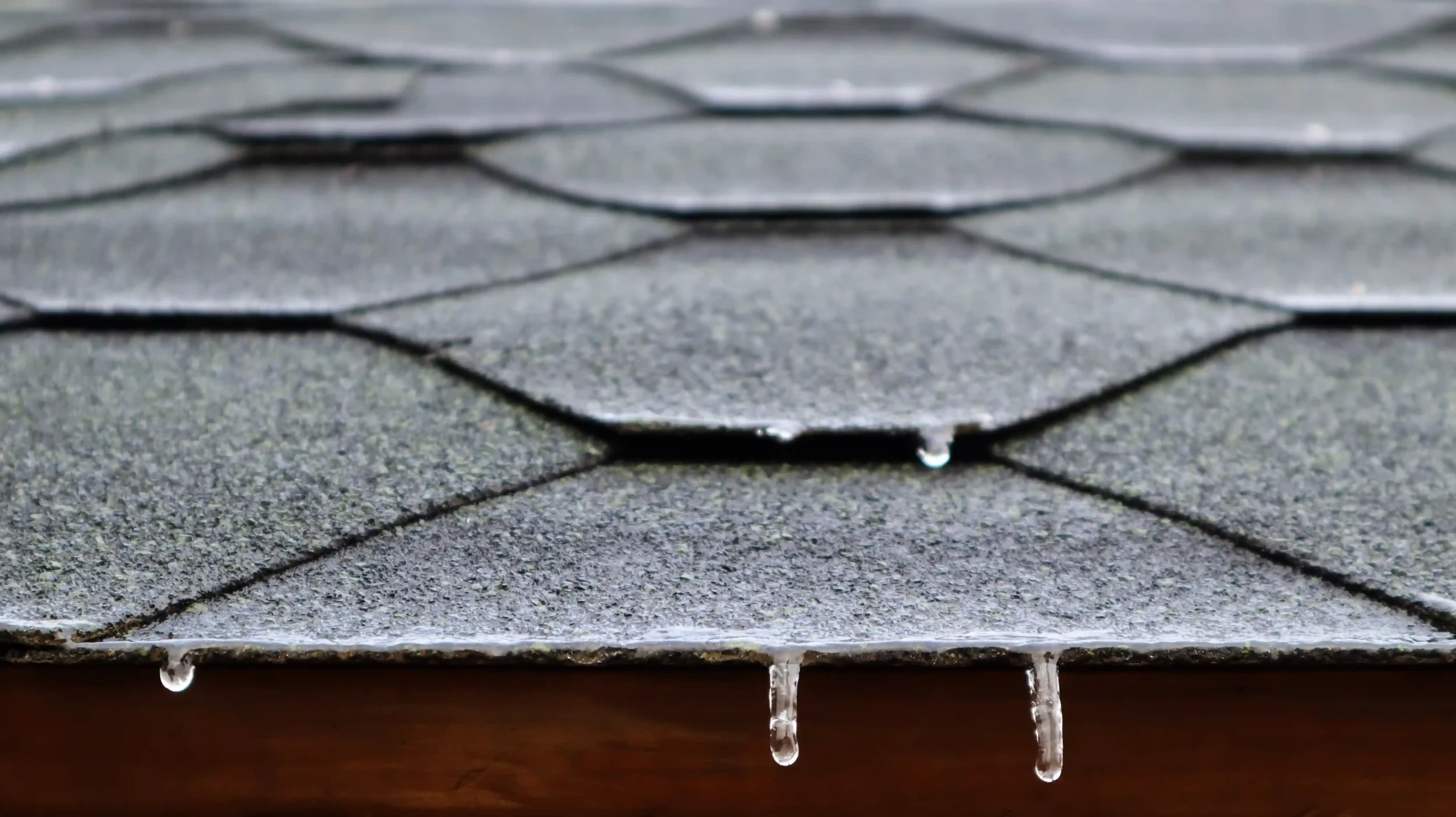
Standing water after heavy coastal storms is more than an annoyance—it often signals an urgent need for flat roof drainage repair. When water lingers for longer than 48 hours, the National Roofing Contractors Association warns that ponding degrades commercial membrane seams and accelerates deck deflection. Before minor pooling creates catastrophic interior leaks, our commercial roofing specialists can diagnose the issue. If your roof retains standing water, contact our team for a full evaluation.
A flat roof is an efficient, durable roofing choice for commercial buildings, multifamily complexes, additions, garages, and coastal modern homes along the Oregon Coast. However, a low-slope roof should never act as a holding basin for rainwater.
In Seaside, Oregon, frequent coastal downpours, salt air, and wind-driven debris put heavy demands on roof drainage systems. While a thin film of water right after a storm is normal, water that lingers in the same spots for more than 48 hours after rainfall stops—known in the roofing industry as ponding water—signals a slope, drainage, or membrane problem that requires attention.
At Dr. Roof, our low-slope specialists bring over 10 years of Pacific Northwest roofing experience to residential and commercial properties across Seaside and Clatsop County. Catching drainage issues early prevents saturated insulation, membrane failure, and costly structural deck repairs.
Flat Roof Drainage Repair: Symptoms and Targeted Solutions
Use this diagnostic reference to match what you see on your roof or ceiling with the most likely underlying cause.
| What You Are Observing | Most Likely Underlying Cause | Recommended Drainage Repair |
| Water sits in one area 48+ hours after rain stops | Crushed insulation (“birdbath”), structural sag, or inadequate pitch | Install tapered polyisocyanurate crickets or saddles to restore positive slope |
| Water backs up around a drain or spills over parapet walls | Clogged strainer dome, blocked internal drain line, or undersized scupper | Clear drain lines, replace missing strainers, or enlarge through-wall scuppers |
| Bubbles, wrinkles, or open seams under standing water | Trapped sub-membrane moisture or deteriorated TPO, PVC, or EPDM seams | Perform moisture scan, dry or replace wet insulation, and heat-weld new patches |
| Dark silt rings, moss, or pine needles in recurring spots | Windblown coastal sand and needles forming organic dams in low zones | Remove debris, clean roof surface, and correct the minor depression |
| Ceiling stains near exterior walls or HVAC units | Water backing up over parapet flashing, curb seams, or pitch pans | Re-detail curb/parapet flashing and add secondary overflow drainage |
Why Flat Roof Drainage Is Critical on the North Oregon Coast
Despite the name, flat roofs are engineered with a subtle pitch—typically 1/4-inch per foot—to guide rainwater steadily toward internal roof drains, through-wall scuppers, or perimeter gutters. When that pathway slows down, standing water creates two major risks for Seaside buildings:
- Heavy Structural Load: Just one inch of standing water weighs 5.2 pounds per square foot. Across a 1,000-square-foot low-slope section, a two-inch pond adds over 10,000 pounds of unexpected dead weight on roof joists and decking.
- Accelerated Coastal Wear: Properties near Broadway Street, the Seaside Promenade, the Necanicum River, and Highway 101 face relentless windblown sand, hemlock and spruce needles, and salt spray. Salt air corrodes metal drain clamping rings, fasteners, and scupper liners, while organic debris turns minor low spots into permanent puddles.
7 Warning Signs Your Flat Roof Needs Drainage Repair
1. Standing Water Remains More Than 48 Hours After Rain Stops
According to National Roofing Contractors Association (NRCA) standards, water that evaporates within 24 to 48 hours of clear weather is generally harmless. Water that stays behind longer—or never fully dries between Oregon Coast storms—is active ponding. Prolonged water exposure breaks down adhesives, accelerates UV degradation by magnifying sunlight, and steadily works its way into microscopic seam flaws.
2. Overflowing Internal Drains, Scuppers, or Conductor Heads
Low-slope roofs depend on clear exit points to shed heavy coastal rainfall rapidly. When leaves, coastal grasses, roofing granules, or roofers’ leftover debris clog drain strainer domes, pack into through-wall parapet scuppers, or choke exterior conductor heads and downspouts, water backs up across the roof field. If water spills over the top of a parapet wall or runs down exterior siding during heavy rain, your drainage outlets are restricted or undersized.
3. Visible Dips or “Birdbaths” in the Roof Surface
If water collects in the exact same spot every time it rains even though your drains are clear, the roof assembly itself has developed a low spot. On commercial and residential flat roofs, these depressions—often called birdbaths—usually happen when foot traffic or heavy HVAC servicing crushes the rigid foam insulation board beneath the membrane, or when older wood framing settles over time. Left uncorrected, the weight of the trapped water deepens the sag each winter.
4. Bubbling, Blistering, or Separating Roof Membrane Seams
Unlike sloped shingle roofs, flat roofs rely on continuous single-ply membranes (TPO, PVC, EPDM) or multi-ply modified bitumen sheets to form a watertight barrier. When water pools over seams, HVAC curbs, skylight frames, or plumbing vent boots, hydrostatic pressure forces moisture into tiny openings. Trapped moisture then expands when the sun warms the roof, creating visible surface blisters, wrinkles, or peeling lap seams.
5. Interior Ceiling Stains or Dampness Near Exterior Walls
A flat roof leak rarely drips straight down beneath the puddle on the roof. Once water penetrates a compromised seam or flashing joint, it travels laterally along vapor barriers, insulation boards, and metal or plywood decking before finding a fastener hole or wall cavity. Watch for yellowing ceiling tiles, bubbling drywall paint, dampness along interior parapet walls, or musty odors—especially in retail spaces, offices, and tenant units where hidden leaks can damage inventory and electrical systems.
6. Localized Moss, Algae, and Silt Rings in the Same Zone
Coastal humidity encourages organic growth, but concentrated patches of green algae, moss, or dark dirt rings in one section of a flat roof act like a topographic map of poor drainage. Wind carries beach sand, pollen, and conifer needles across the roof and deposits them in slow-draining basins. That trapped sediment holds moisture like a sponge, damming up even more rainwater and eating away at protective roof coatings.
7. Previous Roof Patches Keep Failing in the Exact Same Location
If a contractor has already applied mastic, liquid silicone, or a membrane patch to a recurring leak—only for water to return a few months later—the underlying issue is slope, not just surface wear. Standard roof sealants and cold-applied patches are not designed to sit submerged underwater week after week. Until positive drainage is restored around the repair zone, standing water will continue breaking down new patches.
How Dr. Roof Diagnoses and Repairs Flat Roof Drainage Issues
Effective drainage repair starts with identifying how water moves across the entire roof—not just smearing sealant over a wet spot. During a comprehensive low-slope evaluation, Dr. Roof performs:
- Slope and Drainage Path Mapping: We inspect every internal drain, scupper, overflow outlet, gutter, and downspout to locate blockages, broken clamping rings, or negative slope.
- Seam, Curb, and Flashing Inspection: We probe heat-welded seams, check pitch pans around mechanical penetrations, and inspect parapet coping caps for wind and salt-air deterioration.
- Sub-Surface Moisture Assessment: Where blistering or soft spots appear, we check whether underlying polyisocyanurate or fiberboard insulation has absorbed water.
Targeted Drainage Solutions (Without Unnecessary Full Replacement)
Finding ponding water does not automatically mean you need an entire new roof. When the main membrane still has years of serviceable life left, targeted corrective work can solve the problem permanently:
- Tapered Insulation Crickets & Saddles: Installing custom-sloped foam insulation boards beneath a new reinforced membrane section redirects water smoothly out of low birdbaths and toward active drains.
- Drain & Scupper Upgrades: Replacing corroded drain assemblies, installing domed strainers, cutting larger through-wall scuppers, or adding secondary overflow drains prevents backups during peak winter storms.
- Reinforced Seam & Flashing Reconstruction: Stripping out failed temporary patches and installing heat-welded membrane overlays and watertight curb flashing eliminates chronic entry points.
(If a moisture evaluation reveals widespread saturated insulation or brittle, failing membrane across the building, we provide clear, itemized replacement options engineered for Oregon Coast wind and rainfall standards.)
Commercial & Residential Flat Roofing Across Seaside and the North Oregon Coast
Dr. Roof serves commercial building owners, HOA boards, property managers, and homeowners throughout Seaside, Gearhart, Warrenton, Astoria, and Cannon Beach—from oceanfront properties near the Seaside Promenade and Broadway Street to commercial corridors along Highway 101 and residential neighborhoods near the Necanicum River and Seaside Golf Course.
We recommend scheduling a preventative flat roof drainage check every fall before peak coastal storms arrive, each spring to clear winter debris, and immediately after any HVAC or rooftop contractor work.
Frequently Asked Questions About Flat Roof Ponding in Seaside, OR
How long is too long for water to sit on a flat roof?
Under industry standards, water should drain or evaporate within 48 hours after rainfall ends. Water remaining in the same spot longer than 48 hours qualifies as ponding water and should be evaluated before it degrades the membrane or saturates insulation.
How much weight does standing water add to a flat roof?
Every 1 inch of water adds 5.2 pounds per square foot of weight. Even a shallow 1.5-inch pond covering a 20-by-20-foot area adds over 3,100 pounds of continuous load on that section of the roof structure.
Can you fix ponding water on a flat roof without replacing the whole roof?
Yes, in many cases. If the existing membrane and decking are still sound, roofers can clear or enlarge drains, add scuppers, or install tapered insulation crickets over the low spot and tie them seamlessly into the surrounding roof membrane.
Why does my flat roof leak only during heavy coastal rainstorms?
Light rain drains fast enough to stay below vulnerable areas. During heavy or wind-driven Seaside downpours, restricted drains or low spots allow water depth to rise high enough to submerge open seams, flashing laps, or HVAC curb joints.
Does coastal salt air affect flat roof drainage components?
Yes. Salt-laden air accelerates rust and galvanic corrosion on galvanized metal flashing, drain clamping rings, fasteners, and scupper liners. Using marine-grade stainless steel, aluminum, or non-corrosive single-ply coated metals extends component life significantly on the Oregon Coast.
Schedule a Flat Roof Drainage Inspection in Seaside, OR
Do not wait for a ceiling stain or tenant disruption to find out where standing water is breaking through your roof. Dr. Roof delivers thorough flat roof inspections, honest moisture diagnostics, and lasting drainage repairs built for Seaside’s coastal climate.
Contact Dr. Roof today to schedule your commercial or residential flat roof inspection in Seaside, OR and keep rainwater moving safely off your building.